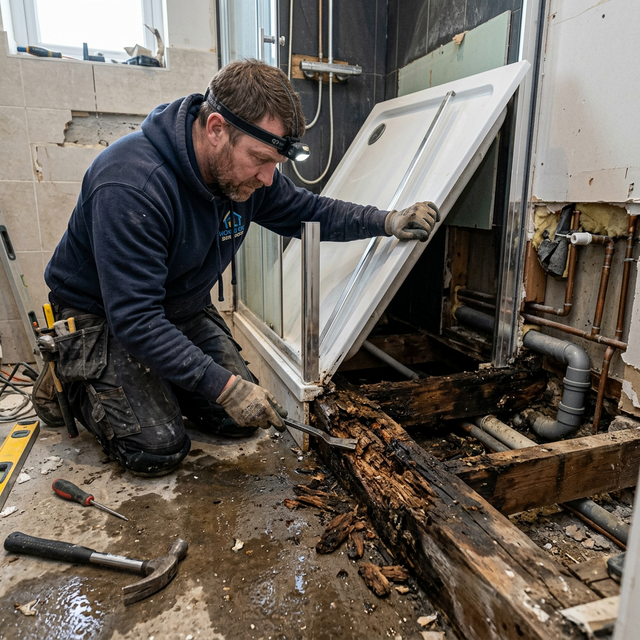
When you step into your shower, it should feel rock solid. If you notice a slight 'bounce', a spongy feeling, or hear a loud creaking sound underfoot, you need to stop using it immediately.
The silicone trap
The first sign of trouble is usually the silicone sealant around the edge of the tray. If the tray is moving, it will tear the silicone away from the tiles, leaving a millimetre gap. Many homeowners make the mistake of scraping out the old silicone and re-applying a fresh bead. But this is just treating the symptom.
Why do shower trays sink?
A tray becomes bouncy because the water that bypassed the broken seal has been slowly soaking into the wooden floorboards and structural joists underneath for months. Timber + constant moisture = wet rot. The wood completely loses its load-bearing strength and begins to compress.
The risk of collapse
If you continue to use a shower resting on rotten joists, you are risking a catastrophic structural collapse. It is incredibly common for the entire tray to suddenly snap the weakened joists and plunge through the ceiling into the room below.
How is it fixed?
This isn't a simple sealing job. You will need a multi-trade handyman or joiner to lift the enclosure, remove the shower tray, cut out the rotten floorboards and joists, and rebuild the base using fresh structural timber and moisture-resistant marine ply. Expect the floor repair alone to cost anywhere from £250 to £500.